Vertical Storage Solutions for Compact Bedrooms
Maximize floor space by going up. Discover wall-mounted shelving, over-door organizers, and hanging systems that double your storage without taking up square footage.

Why Vertical Storage Matters in Compact Spaces
Most small bedrooms waste valuable wall space. You've got floor-to-ceiling height you're not using, and that's where real storage potential hides. When you can't expand outward, you go up. It's that simple.
The trick isn't finding more room — it's using what you've already got. A 9-square-meter bedroom can store 40-50% more clothing by utilizing walls properly. We're talking about strategic shelving, hanging solutions, and organizers that don't require renovation. No drilling into landlord-owned walls either, if that's your situation.
Here's what we'll cover: practical wall systems you can install yourself, storage that looks intentional rather than cramped, and techniques that actually work in Rīga apartments where space comes at a premium.
Wall-Mounted Shelving Systems
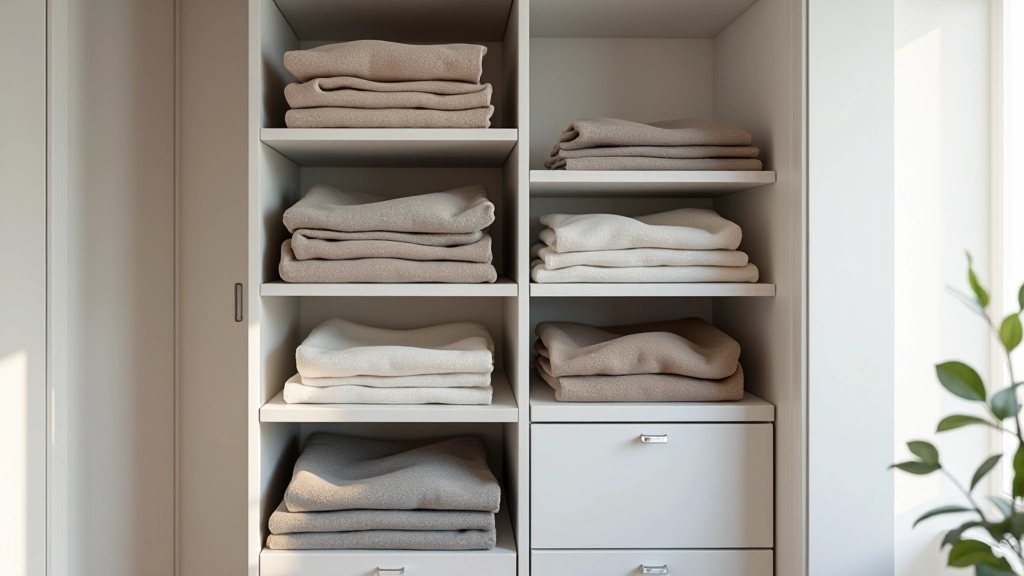
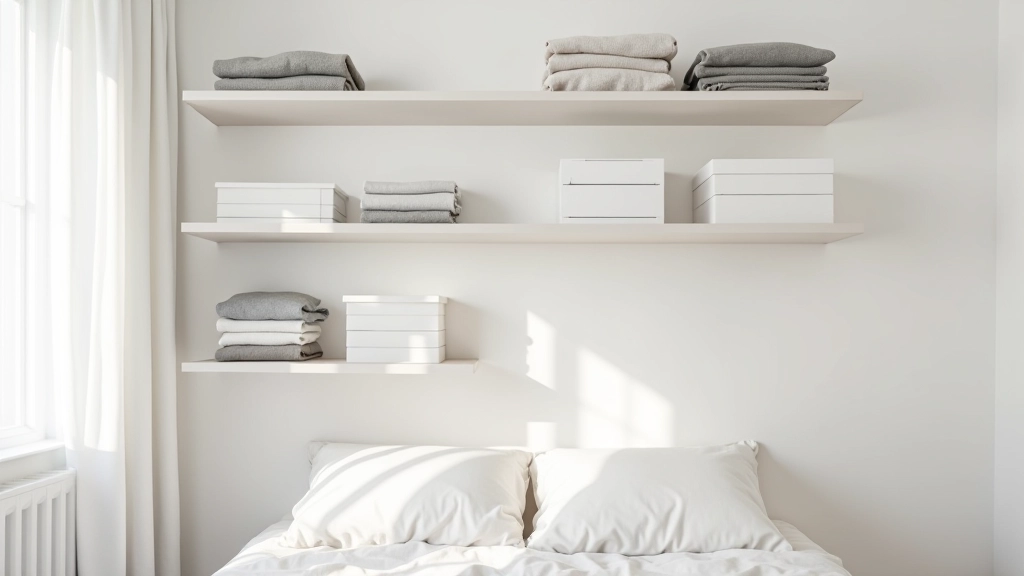
Floating shelves are the foundation of vertical storage. They don't take up floor space, they're visible storage so you can see what you own, and they're straightforward to install. Standard depth is 20-25 cm, which works perfectly for folded clothing stacks.
Install shelves at three heights: one at 180 cm for lightweight items (scarves, hats), one at 120 cm for everyday pieces, and one at 60 cm for things you reach for constantly. This spread prevents top-heavy looks and makes everything accessible. You'll fit roughly 15-20 folded sweaters per shelf depending on fabric weight.
For renters: adhesive-backed shelves exist, though they're weaker. If you're committed to staying, proper wall anchors take 30 minutes and don't damage the wall — you fill tiny holes with spackle when you leave. Most landlords accept this.
Informational Note:
This guide provides educational recommendations for organizing
small spaces. Always check your rental agreement before making
wall modifications. Specific implementation should be tailored to
your room dimensions, wall material, and personal preferences.
Consult a contractor if you're unsure about wall stability or
weight capacity.
Hanging Organizers & Rod Systems
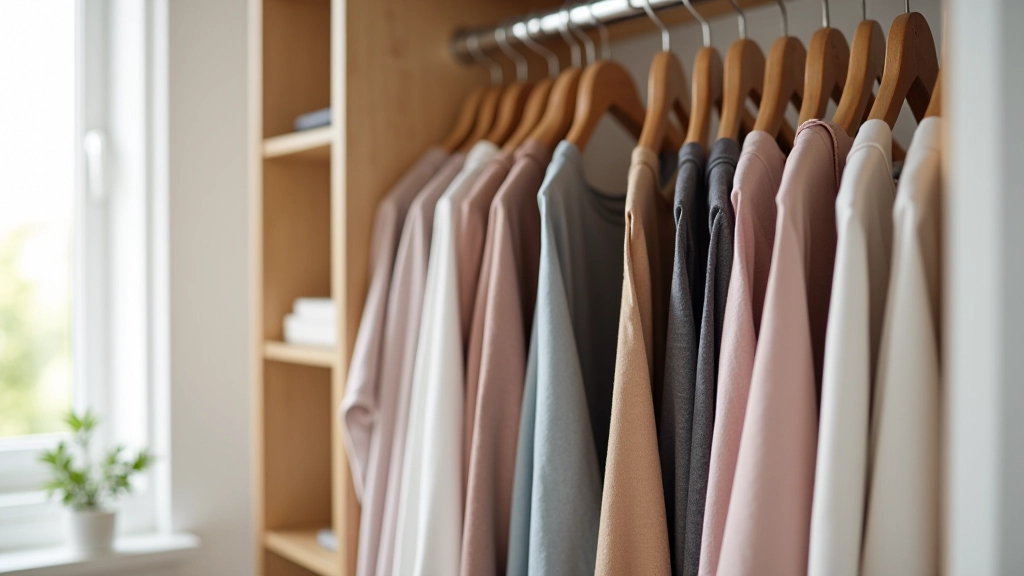
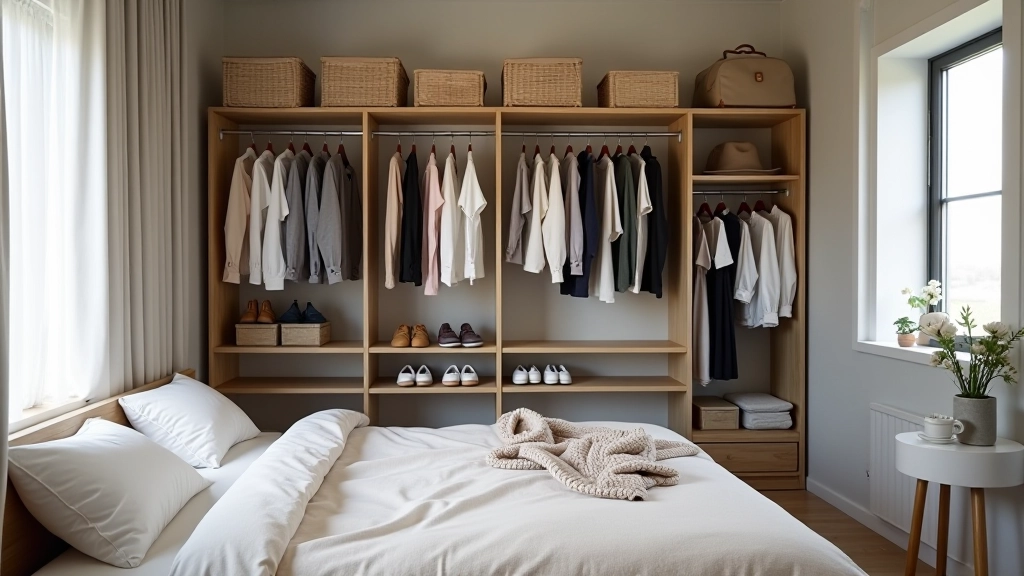
Don't underestimate hanging space. A standard closet rod holds about 30-40 items. But wall-mounted rods take that vertical wall space and multiply your hanging capacity. Two rods stacked vertically — one at 160 cm, another at 80 cm — nearly doubles what you can hang.
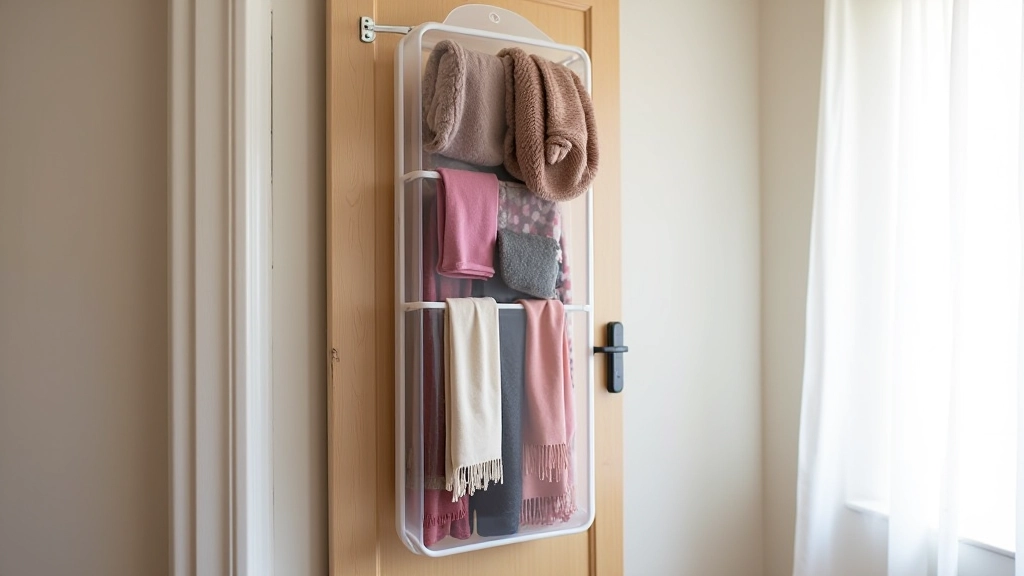
Over-the-door organizers are deceptively practical. A single door can hold 12-16 small items: scarves, belts, lightweight cardigans. They're invisible unless you open the door, so they don't clutter your visual space. For bedrooms with wardrobes instead of closets (common in older Jūrmala apartments), an over-door organizer on the back of your bedroom door adds 0.4 square meters of storage instantly.
Cascading hangers are underrated. Instead of one item per hanger, you stack 4-5 items vertically on a single hanger. This works best for similar items — like all your tank tops or light cardigans together. You'll save roughly 50% of your hanging rod space.
Strategic Box & Drawer Systems
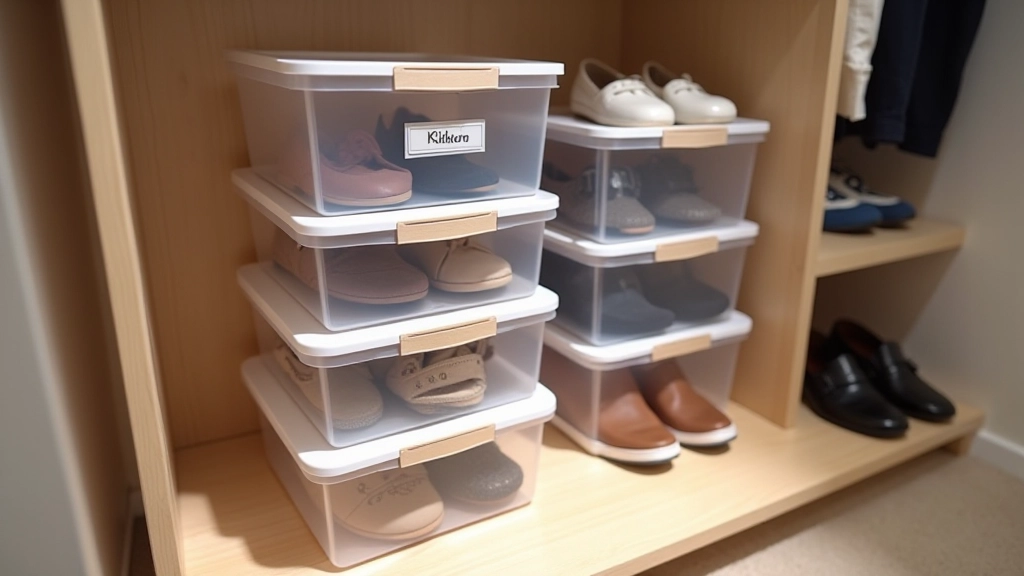
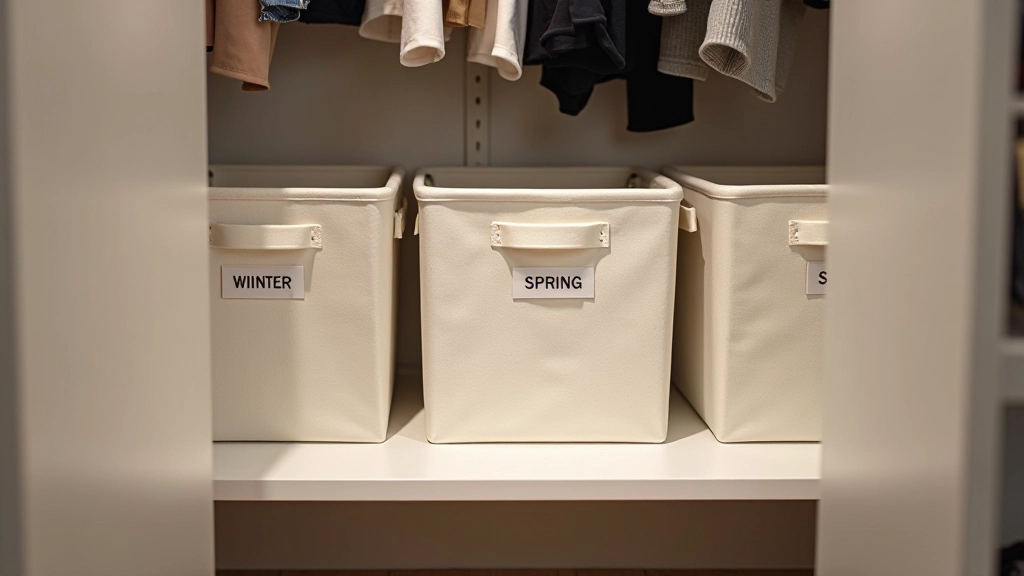
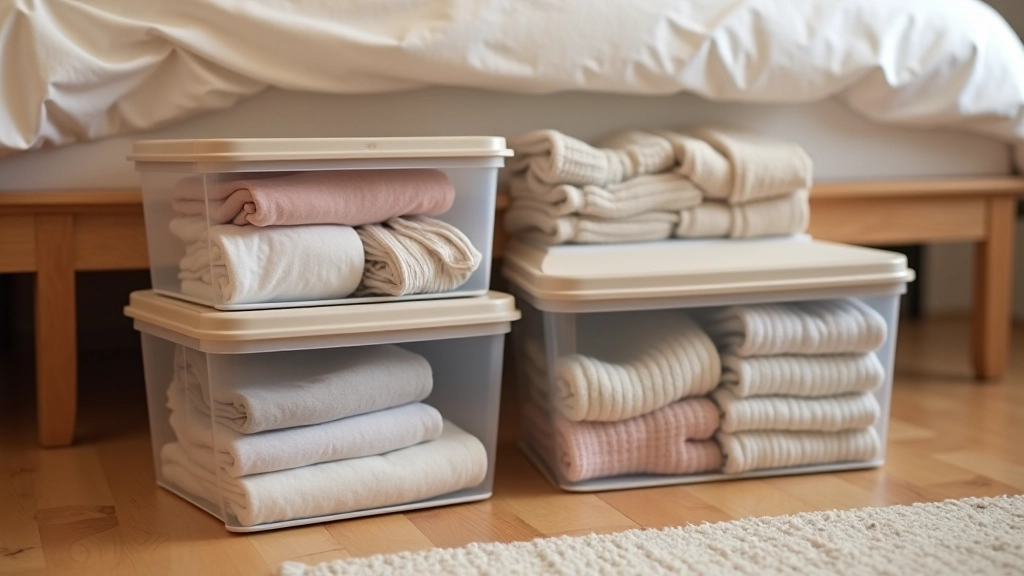
Under-bed storage is obvious, but most people do it wrong. Clear plastic boxes are non-negotiable — you need to see what's inside without opening them. Label them by season: "Winter Sweaters," "Summer Dresses," "Jeans." A single under-bed container holds 15-20 folded items depending on thickness.
Wall-mounted cube organizers are versatile. A 4x4 cube unit (16 cubes) takes up roughly 1 square meter but stores 80-120 folded items depending on fabric weight. Add fabric bins to some cubes and leave others open for visual interest. It looks intentional rather than chaotic.
Corner shelving units maximize dead space. That 45-degree angle corner between two walls? Most people leave it empty. A triangular corner unit there adds 6-8 extra storage cubes without eating into your room's footprint. It's where seasonal items or rarely-worn pieces go.
Practical Implementation Steps
1
Measure Your Walls
Grab a measuring tape. Note wall height, width, and where outlets are located. You'll need at least 30 cm of clear space between shelves for folded stacks. Identify weight-bearing areas — studs in the wall — for heavier loads.
2
Decide on System Type
Renter? Go with adhesive or lightweight options. Homeowner? Invest in wall-anchored shelving. Mixed approach works too — shelves on one wall, hanging rods on another, under-bed storage for off-season items.
3
Organize by Category First
Before installing anything, pull everything out. Fold similar items together. You'll see how much space you actually need and can adjust shelf heights accordingly. This prevents installing systems that don't fit your wardrobe.
4
Install & Test Weight
Install one shelf first. Place your heaviest folded items on it — jeans, sweaters — and check for sagging after 24 hours. If it holds, proceed with the rest. Better to catch issues early than rebuild later.
The Bottom Line
Vertical storage isn't complicated. You're using height instead of floor space. Wall-mounted shelves handle folded items beautifully. Hanging rods multiply your hanging capacity. Under-bed boxes take care of seasonal pieces. Over-door organizers handle accessories.
The real win? You'll see everything you own. No more digging through piles. No more "I forgot I had that sweater." Everything's visible, accessible, and intentional. For compact Latvian bedrooms — whether you're in a Rīga apartment or a Jūrmala cottage — vertical storage transforms a tight space into one that actually works.
Start with one wall. Install floating shelves. Live with it for a week. Once you see how much it changes your space, you'll understand why going vertical is the smartest move for small bedrooms.
Related Articles